
Phone (03) 9435 1285
Send an Email
Teaching and Learning at Watsonia North is drawn from the Victorian Teaching and Learning Model 2.0 and is guided by the Victorian Curriculum 2.0 standards.
Our overarching instructional model is one of Responsive Explicit Instruction. For us, responsive teaching is a key component of effective instruction, enabling teachers to scaffold learning and provide appropriate challenge based on students’ readiness. This approach empowers students to take ownership of their progress and develop greater agency in their learning journey.
We use explicit instruction to provide clarity of direction for both students and teachers. This ensures that learning is intentional and focused, allowing students to grasp complex ideas more effectively. By providing clear explanations and consistent practice, explicit instruction helps build a strong foundation in essential skills, supporting all students.
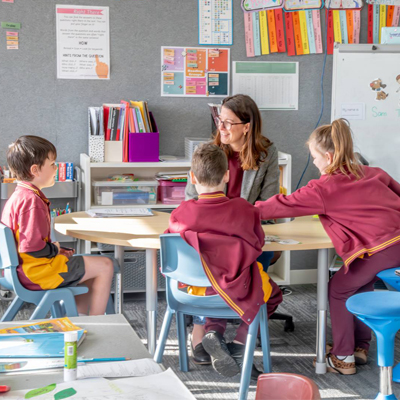
Our Approach to Literacy at Watsonia North Primary School
At Watsonia North Primary School, we are committed to fostering confident, capable, and enthusiastic readers and writers. Our whole-school approach to literacy is firmly aligned with the Victorian Curriculum 2.0 and guided by our instructional model of Responsive, Explicit Instruction. This ensures that every student receives targeted support and challenge at their point of need.
The Workshop Model: Structure with Purpose
Across all year levels, we implement the Workshop Model as our agreed framework for Reading and Writing instruction. This structure empowers students through:
This flexible approach acknowledges that every learner grows at their own pace and requires targeted challenge and support to experience success. It ensures that all students have opportunities to learn with purpose, practice with support, and reflect on their progress.
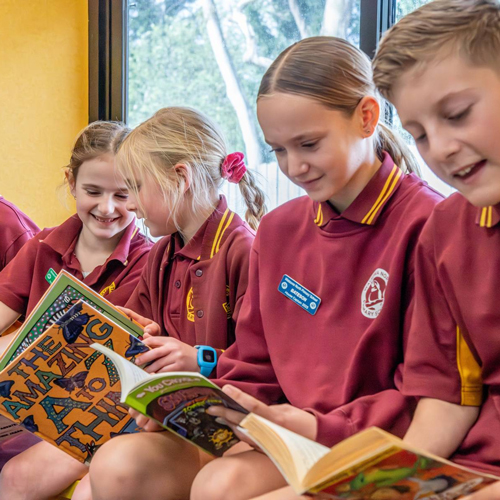
In the early years, our daily implementation of the Little Learners Love Literacy (LLLL) program ensures a consistent and evidence-based approach to phonics instruction. This program includes a structured scope and sequence, the explicit teaching of letters and sounds, and the use of decodable texts that match students’ current knowledge and support reading success.
Students develop fluency, confidence, and a love of reading through engaging, intentional practice.
From Years 3 to 6, students deepen their literacy skills through rich, inquiry-based, and text-based reading and writing experiences that connect learning to the world beyond the classroom. Students develop deeper comprehension, communication, and analysis skills by exploring increasingly complex ideas, reflecting on diverse perspectives, and applying their literacy skills to real-life contexts.
Explicit instruction continues to be a key component of literacy lessons, ensuring that core skills are built systematically. At the same time, our responsive teaching approach allows for daily individual conferencing and targeted teaching groups to ensure every student is seen, heard, and supported.
Through this approach, we foster:
Watsonia North Primary School’s mathematics curriculum is thoughtfully designed, aligning with both the Victorian Curriculum Version 2.0 and the Victorian Teaching and Learning Model (VTLM) 2.0. This approach ensures that students receive high-quality, evidence-based teaching and learning experiences.
At Watsonia North Primary School, the mathematics program is structured around the school’s instructional model, which includes fluency, launch, explore, and summarise. This approach aligns with the principles of responsive and explicit teaching. The school emphasises the importance of investigations, problem-solving, and cooperative group work, linking mathematical concepts to real-world contexts.
The school places a strong emphasis on the role of language in developing mathematical understanding. Teachers utilise the Mathematics Learning Progressions to track and support the progression of mathematical concepts. Additionally, the resource ‘Teaching Primary Mathematics’ by George Booker, Denise Bond, Len Sparrow, and Paul Swan serves as a reference to guide effective teaching practices and address common misconceptions.
The school’s priority is to create an environment where students feel confident to take risks and articulate their thinking, fostering a deep and meaningful engagement with mathematics.
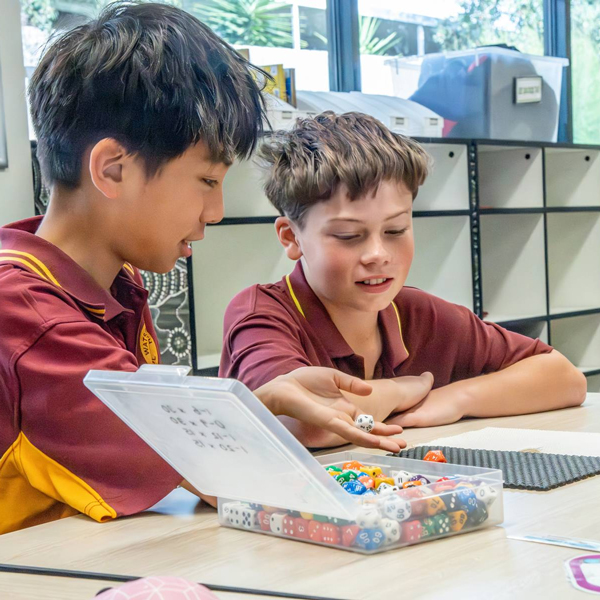
We implement inquiry-based learning as an educational approach to ignite children’s natural curiosity. We encourage them to ask questions, explore, and investigate using Science, the Humanities, Health, Technology, Critical and Creative Thinking, and Personal, Social, and Ethical Capabilities. This approach transforms our students from passive recipients of information into active participants in their learning journey.
By fostering a sense of wonder and critical thinking, inquiry-based learning not only deepens understanding but also cultivates a lifelong love for learning. In essence, it connects the dots between curiosity and knowledge, making learning both meaningful and enjoyable.
Teaching teams plan with Dr. Jeni Wilson, an expert in the field, to provide new Inquiry explorations and investigations each term that align with the Victorian Curriculum 2.0.


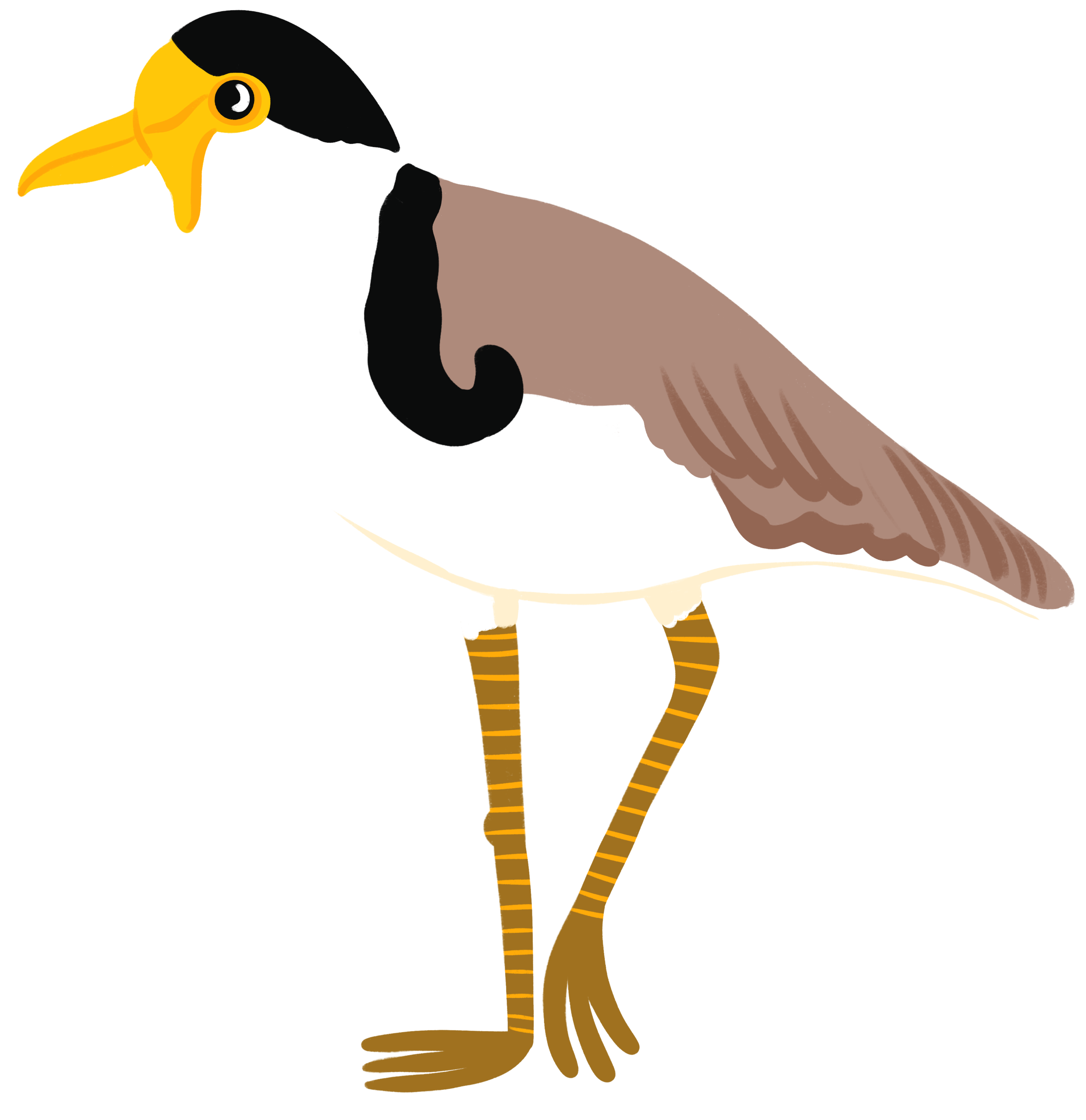
Buongiorno!
At Watsonia North Primary School, all of our students learn Italian for 50 minutes every week. Each session students engage with the Italian language exploring new concepts and language skills, while building on existing knowledge to communicate with others. The use of various digital technologies consolidates concepts taught throughout the grades.
In addition to exploring the Italian language, students are also immersed in the rich and colourful Italian culture. Through songs, rhymes, dances, role-plays, games, cooking and craft work, Watsonia North students flourish in the Italian classroom with the support of an experienced and enthusiastic bilingual teacher.
Watsonia North shares culturally rich opportunities with the wider community, through our much-loved Carnevale Day Education Week activities, and the Italian herb garden.
Distinti saluti,
Signora Tombolato

Our library is more than just a place for books—it’s a vibrant, welcoming space where students build a love of reading, explore new ideas, and develop important research skills.
Reading for Pleasure
Students are encouraged to explore a wide range of books—fiction, nonfiction, graphic novels, and more—helping them discover what they love to read.
Story Time & Book Talks
Younger students enjoy read-aloud sessions that spark imagination, while older students take part in book talks and discussions to deepen their understanding and curiosity.
Inquiry & Exploration
The library supports classroom learning by helping students ask big questions, investigate topics, and work on projects.
A Safe, Quiet Space
The library is also a calm place where students can relax, read, and recharge—whether it’s during class time, breaks, or lunchtime.
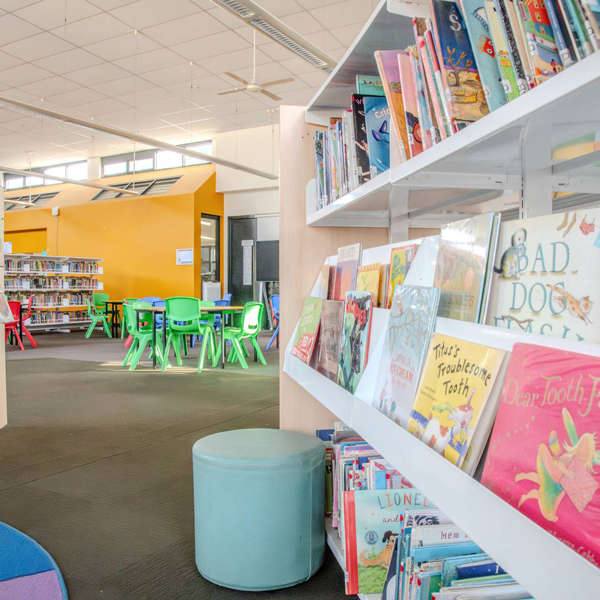
The library plays a key role in supporting your child’s learning, creativity, and independence. It’s a place where students grow not just as readers, but as thinkers and lifelong learners.
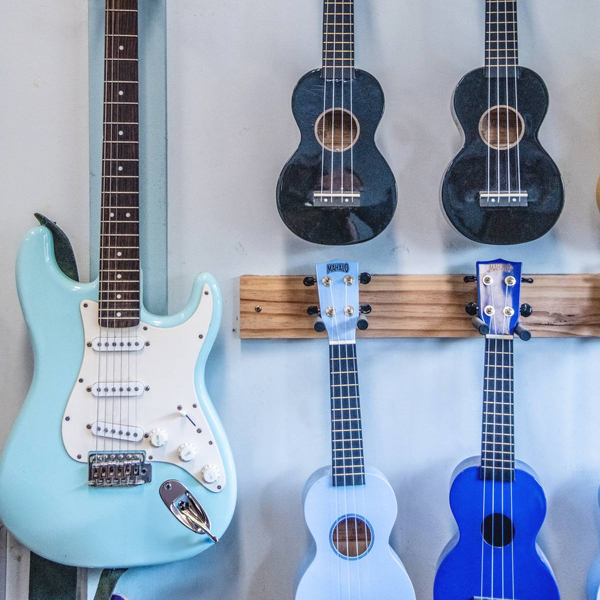
Music is an aspect of our Performing Arts Program and is for Preps to Year 6. It is a developmental program incorporating the Kodaly Philosophy.
Our music education program helps students grow through the joy of music—whether they’re singing, playing instruments, or just learning to listen and appreciate different sounds and styles. Music is a powerful way for children to express themselves, build confidence, and connect with others.
What Parents Can Expect:
Hands-On Learning: Students explore music by singing, playing instruments, and moving to rhythms.
Supports Academic Growth: Music education builds focus, memory, and math/language skills.
Performance Opportunities: Students may get the chance to perform in concerts, recitals, or school events (don’t worry—no pressure!).
Music from Around the World: We introduce kids to a wide range of musical styles, cultures, and traditions.
Social and Emotional Growth: Music encourages creativity, teamwork, patience, and self-expression.
Whether your child is new to music or already plays an instrument, our program meets them where they are and helps them grow.
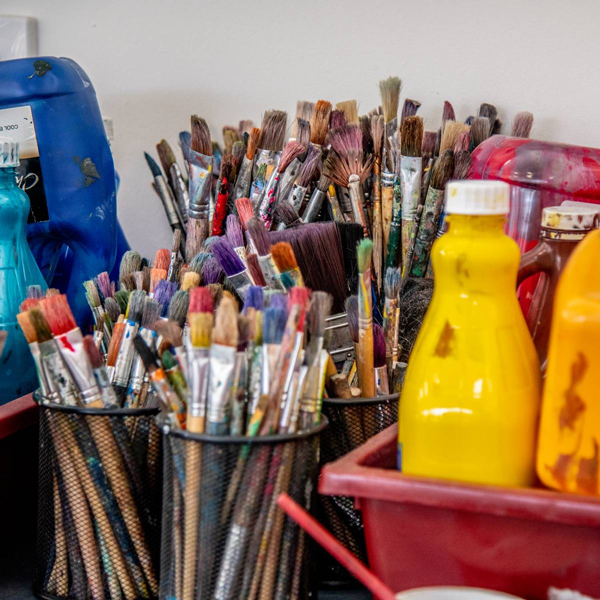
Our Art program provides an opportunity for creative expression, control of a range of media and development of skills. The art room is well equipped, giving children the opportunity to develop their creative talents. Ms Clare Meehan and Sou Corrance are our Visual Arts Specialists.
In our Visual Arts program children have a chance to explore their creativity, build confidence, and express themselves in fun and meaningful ways. Through drawing, painting, sculpture, and especially working with clay, students learn to turn their ideas into something they can see—and touch!
What Parents Can Expect:
Creative Freedom: Students explore a wide range of art materials and techniques, including painting, collage, printmaking, and drawing.
Clay Creations: One of the highlights of our program is working with clay! Children love shaping, molding, and sculpting with their hands—helping them build fine motor skills and patience while creating something truly their own.
Self-Expression & Confidence: Art gives students a chance to express their feelings, ideas, and imagination in a supportive, non-judgmental space.
Learning About Art & Culture: We introduce students to famous artists, different styles, and artwork from around the world to inspire creativity and cultural awareness.
Skill Development: Along the way, children build important skills like problem-solving, spatial awareness, hand-eye coordination, and attention to detail.
Every student is an artist in our classroom. Our program celebrates individual creativity and encourages students to take pride in what they make—whether it’s a colorful painting or a one-of-a-kind clay sculpture.
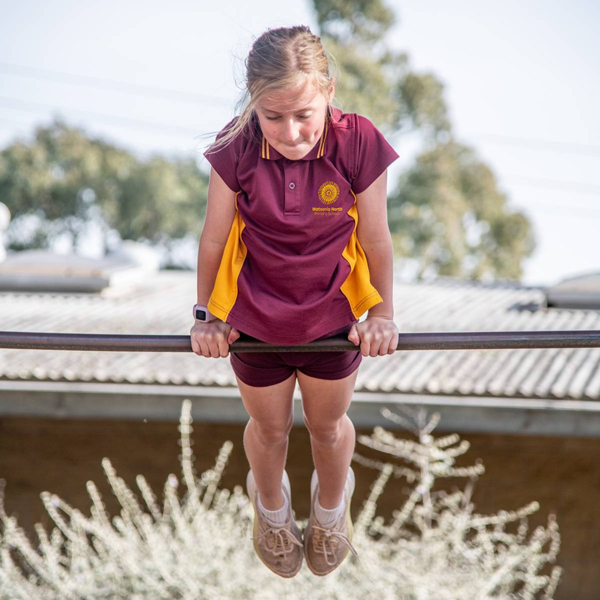
The emphasis of the Physical Education and Sports Program is the development of skills, coordination, cooperation, enjoyment and healthy, positive attitudes to physical activity which will prepare children for future recreational pursuits.
The Physical Education Teacher is responsible for covering the areas of major and minor games, athletics, gymnastics, ball handling and dance. Mr Trent O’Sullivan is our Sport/Physical Education Specialist.
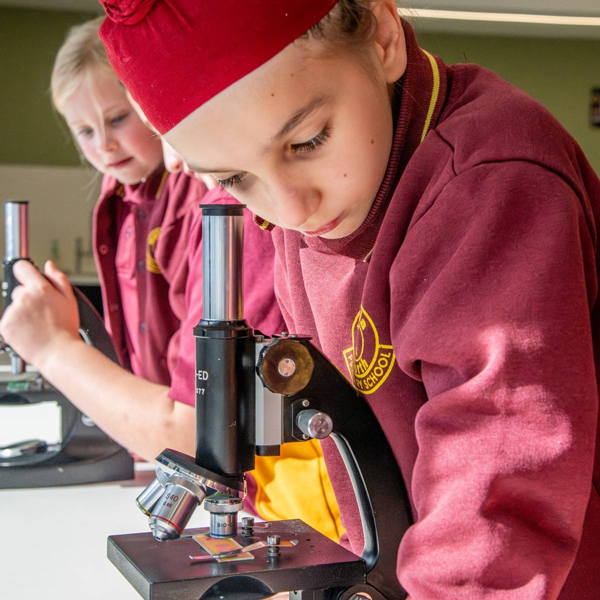
During STEM students explore Science, Technology, Engineering, and Mathematics in a fun, hands-on way. Students work together to solve real problems, build projects, and learn how things work in the world around them.
What Parents Can Expect:
Hands-On Learning: Your child will build, create, experiment, and explore through exciting projects.
Real-World Skills: From basic coding to using everyday technology, students learn skills they can use in school and future careers.
Critical Thinking: We encourage kids to ask questions, think through challenges, and come up with creative solutions.
Teamwork and Confidence: Group work builds collaboration and helps students grow more confident in their ideas.
Future-Ready: STEM is all around us—from smartphones to space exploration. This program helps prepare your child for the future, no matter what they choose to do.
Our STEM program is designed to spark curiosity, build skills, and make learning exciting and meaningful. No special experience is needed—just an interest in exploring and having fun!
Our intervention program is designed to support every student to get the support they need to succeed. We know that all children learn in different ways, at different paces and sometimes they need a little extra help to build confidence and catch up.
We use a continuous assessment model to support and personalise student learning. This means assessment is embedded in everyday classroom activities—not just something that happens at the end of a unit.
Students are regularly assessed on specific skills as part of their normal learning routine, and teachers provide timely feedback that is shared with families as it happens.
We use both formative assessment (checking progress during learning) and summative assessment (reviewing learning after a period of time). This helps teachers understand exactly where each student is at and how to best support them.
This ongoing information also helps teachers make informed decisions about where students are placed on the Victorian Curriculum. These formal judgements are shared with families through written semester reports twice a year.
Because we can anaylse real time data about our student skill levels, we are able to use this information to tailor our instructional model to suit our children’s needs.
We use a workshop model in many areas of the curriculum, especially in literacy and numeracy. This structure includes;
Through point-of-need teaching, students receive support or extension based on where they are in their learning journey. Teachers work with individuals or small groups throughout the workshop, offering targeted instruction, answering questions, or guiding students as they practise new skills.
This model ensures every student:
We believe that open, ongoing communication between home and school is key to student success. Here’s how we keep parents informed about achievement:
Start-of-Year Meet & Greet
At the beginning of the year, parents are invited to meet their child’s teacher. This is a chance to share insights, ask questions, and build a strong partnership early on.
Mid-Year Three-Way Conferences
In the middle of the year, students lead a three-way conference with their parents and teacher. It’s a time to reflect on achievements, share work, and set goals for the remainder of the year.
Open Door for Communication
Parents are encouraged to reach out at any time during the year to arrange a meeting with their child’s teacher—whether to discuss academic progress, social development, or emotional wellbeing.
We’re committed to making learning visible, purposeful, and personal. Our goal is to work closely with families to ensure every child feels confident, capable, and supported throughout their learning journey.