Phone (03) 9435 1285
Send an Email
At Watsonia North Primary School (WNPS), we are committed to creating a safe, caring, and inclusive environment where every student feels valued, supported, and empowered to thrive.
Our whole-school approach to wellbeing includes a range of evidence-based programs and strategies that help students build emotional awareness, resolve conflict, regulate their emotions, and become resilient, respectful learners.
We believe that every child’s story matters—and we work hard to ensure each student feels seen, heard, and supported in all aspects of their development.




Listening and using kind words. Following the rules, telling the truth and treating others the way we want to be treated. We look after our school, community and ourselves in all that we do.
Sharing and including people in what we are doing. Helping when someone needs it and using kind and thoughtful words fill other peoples buckets. Try giving a nice smile or saying “Hi” to someone new.
Keep going when tasks take a long time or get hard. Finding other ways to solve problems and take small steps toward big goals. Always celebrate the effort and progress along the way.
At our school, our core values guide the way we learn, work, and treat one another. These values aren’t just words on a wall—they are part of our daily conversations, expectations, and celebrations. We use them to help children understand what it means to be a kind, respectful, and persistent member of our school community.
Talking Points
Teachers and students regularly refer to our core values during class discussions, circle time, and reflection activities. They help students make sense of their actions and decisions in a positive, supportive way.
Teaching Points
Each value is explicitly taught and explored through stories, role-play, real-life examples, and classroom expectations. We help students understand what each value looks like, sounds like, and feels like in action.
Celebrating Success
Those who consistently demonstrate our core values are recognised with a Student Achievement Award. These awards highlight behaviours such as helping others, showing resilience, acting with honesty, taking responsibility and fostering a strong, positive school culture.
Restorative Practices focus on connection, communication, and accountability. Instead of asking “Who’s to blame and what’s the punishment?”, we ask:
This approach encourages students to take responsibility for their actions, understand how others are impacted, and find ways to repair harm and move forward.
How It Works
Restorative Conversations – Teachers guide students through calm, respectful conversations to talk about conflict, reflect on choices, and come up with solutions together.
Restorative Circles or Meetings – When needed, small groups (including those involved in a situation) meet to share feelings, listen to each other, and agree on steps to make things better.
Repairing Relationships – The focus is on learning, growing, and rebuilding trust—not simply giving consequences.
Why We Use It
Restorative Practices are about helping children become thoughtful, respectful people who can own their actions and make things right when mistakes happen. We believe this is a powerful way to support positive behaviour, emotional growth, and strong relationships—in school and beyond.
The Resilience, Rights and Respectful Relationships (RRRR) program is a mandatory Victorian Government initiative and a vital part of our wellbeing framework.
This program supports students’ social and emotional learning through eight key topics:
The Department of Education has developed age-appropriate resources and lessons for each topic, which we use across all year levels.
Respectful Relationships education also focuses on:
At WNPS, this is implemented through a whole-school approach—because everyone in our school community deserves to be respected, valued, and treated equally. This program helps students build healthy relationships, resilience, confidence, and respect for others.
In 2025, our staff worked together to develop a clear and consistent whole-school behaviour matrix, outlining shared expectations for students across all settings. Each classroom also co-creates its own set of classroom expectations with students.
These expectations form the foundation of our school’s Positive Classroom Management Strategies (PCMS)—the centrepiece of our wellbeing and behaviour framework.
PCMS includes 8 evidence-informed instructional practices that:
The PCMS is based on the belief that:
By using consistent language, high expectations, and positive reinforcement, our staff help students understand what is expected of them and how to contribute positively to the school community.
Play by the rules of the game
Wear a hat and be SunSmart
Place rubbish in bins
Use equipment for its intended purpose
Wait patiently for your turn
Eat and play in assigned areas
Bounce back when things don’t go your way
Seek to make friends
Try to solve problems
Treat gardens and school grounds with care
Consider other people’s feelings
Help others when needed
Knock and wait before entering
Keep belongings neat and tidy
Greet people entering the room
Keep trying if things don’t go right
Think flexibly when challenged
Take charge of your own learning
Be open to new ways of solving challenges
Treat others how you like to be treated
Use active listening
Be helpful when needed
Take care of school property
Communicate with clarity and courtesy
Keep hands and feet to yourself
Leave spaces clean and tidy
Learn from mistakes
Ask for help when needed
Give your best effort
Regulate emotions using your toolkit
Speak kindly to everyone
Accept differences of others
Be aware of how your behaviour impacts others
Walk in a single line, respecting others’ personal space
Line up in designated areas and move when music plays
Support learning by moving quietly around school
Be inclusive and sensitive to others’ feelings
Give others privacy in the toilets
Leave toilet areas clean and tidy
We are committed to ensuring that students with disabilities are fully included and supported in every aspect of school life. We use an inclusive approach to teaching and learning that considers the diverse strengths, needs, and goals of each student.
Through individualised support, reasonable adjustments, and collaboration with families, we aim to remove barriers to learning and ensure that all students can access the curriculum and reach their full potential.
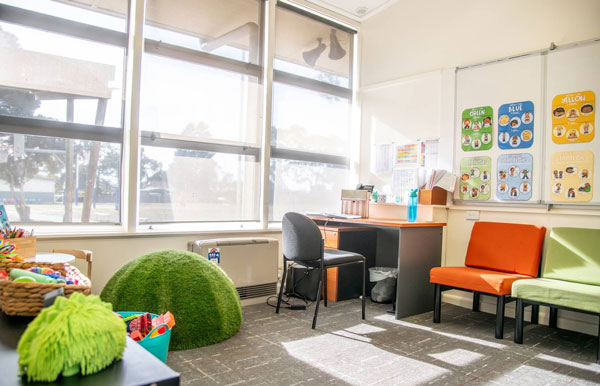
Nadia, our School Counsellor plays an important role in supporting the emotional, social, and mental wellbeing of our students. She works as part of our broader wellbeing team to help students feel safe, supported, and ready to learn.
In her role, Nadia assists students presenting with issues such as low self-esteem, anxiety, social and emotional regulation and positive relationships.
The counselling is not performed by a psychologist or designed to be intensive or ongoing therapy. Families that require this type of assistance are encouraged to seek this support, outside of the school.